
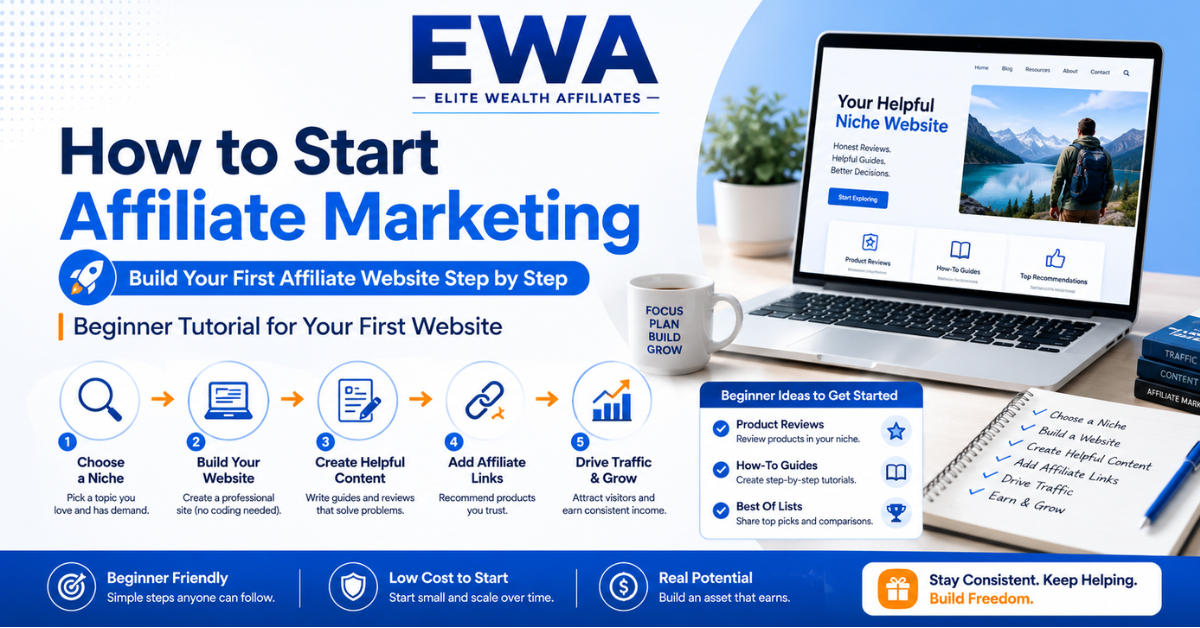
Learning how to start affiliate marketing can feel confusing at first, but the process becomes much easier when you break it into clear steps.
Affiliate marketing is a business model where you recommend products, services, tools, or platforms online and may earn a commission when someone makes a qualifying purchase through your referral link. For beginners, the goal is not to get rich quickly or throw links everywhere. The goal is to choose a focused topic, build a simple website, create helpful content, and connect readers with solutions that genuinely fit what they are searching for.
In this guide, we’ll walk through how to start affiliate marketing step by step. You’ll learn how to choose a niche, build your first website, find affiliate programs, create content, and avoid the common mistakes that cause many beginners to quit too early.
If you want to build a flexible online project around helpful content and honest recommendations, this beginner tutorial will help you understand where to start and what to focus on first.
This post contains affiliate links. If you purchase through them, we may earn a small commission at no extra cost to you.
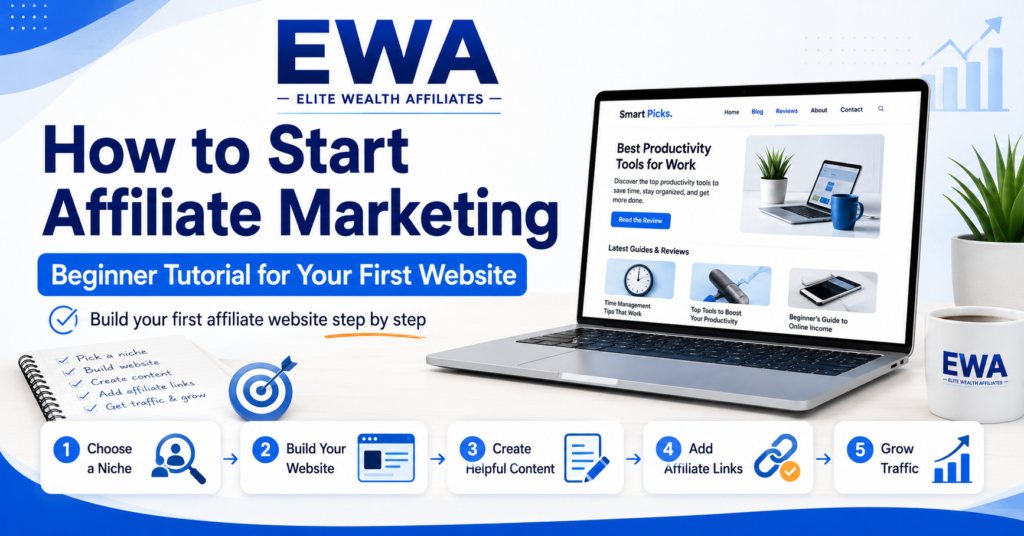
Table of Contents
Build Your First Affiliate Website One Step at a Time
Learning how to start affiliate marketing becomes much easier when you focus on one clear goal first: building your first affiliate marketing website.
A lot of beginners get overwhelmed because they try to learn everything at once. They worry about niches, traffic, SEO, affiliate programs, commissions, social media, tools, and training platforms before they even have a simple website started. The better approach is to slow down and build the foundation first.
Your first affiliate website does not need to be perfect. It does not need hundreds of articles. It does not need advanced design. It simply needs a clear topic, helpful content, and a structure that gives visitors a reason to trust what you publish.
In this beginner tutorial, we’ll walk through how to start affiliate marketing by building your first website step by step.
You’ll learn how to choose a niche, plan your website, create your first pages, write helpful content, join affiliate programs, add affiliate links responsibly, and avoid the common mistakes that slow beginners down.
If you are still learning the basic concept, our Affiliate Marketing for Beginners: Step-by-Step Guide to Getting Started explains how the full process works before you build your first website.
Start With the Purpose of Your Website
Before choosing a domain name or writing your first article, it helps to understand what your website is supposed to do. An affiliate marketing website should help people make better decisions. That might mean explaining a product, comparing options, answering beginner questions, solving a common problem, or guiding someone toward a tool or service that fits their needs.
The website is not just a place to drop affiliate links. It is the home base for your content. It gives you a place to organize helpful articles, build trust with readers, and create a long-term resource around one focused topic.
A strong beginner affiliate website usually does three things:
- Helps a specific audience
- Covers a focused topic
- Recommends useful products or services naturally
When you keep those three ideas in mind, the rest of the process becomes easier.
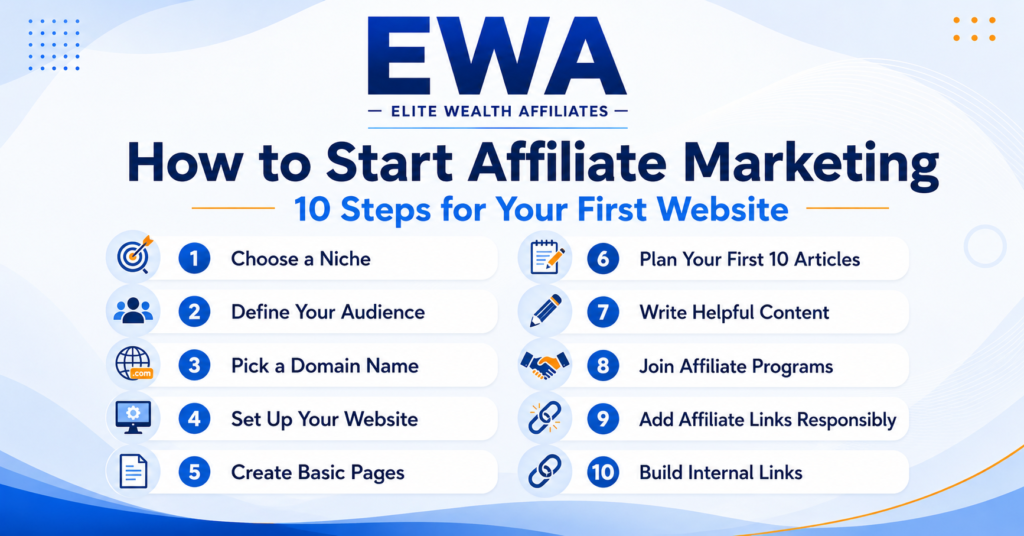
Step 1: Choose a Niche for Your First Website
Your niche is the main topic your website will focus on. This is one of the most important decisions beginners make because your niche affects your content, audience, affiliate programs, keywords, and long-term direction.
A niche does not have to be complicated. It can be based on a hobby, problem, product category, lifestyle need, or area where people regularly search for help.
Examples include:
- Home fitness equipment
- Beginner golf gear
- Camping and outdoor supplies
- Website building tools
- Pet care products
- Home office equipment
- Healthy meal planning
- Budget-friendly technology
- Affiliate marketing for beginners
The key is to avoid going too broad. A website about “everything that helps people live better” is hard to organize. A website about “beginner home gym equipment” is much clearer. For your first affiliate website, choose a niche that is specific enough to guide your content but broad enough to give you plenty of article ideas.
A good beginner niche usually has:
- Products or services people already buy
- Questions people search for online
- Problems you can help explain or solve
- Enough content ideas to build around
- Affiliate programs available in that space
You do not need the perfect niche. You need a focused starting point.
Before choosing a niche or joining programs, it helps to understand what affiliate marketing is and how it works so the website-building process makes more sense.
Step 2: Decide Who Your Website Is Helping
Once you choose a niche, think about the person your website is helping. This matters because affiliate marketing works best when your content feels useful to a specific reader.
For example, a fitness site could help:
- Beginners building a home gym
- Older adults looking for low-impact exercise
- Busy parents trying to work out at home
- People comparing treadmills or exercise bikes
- Beginners looking for affordable strength training equipment
Each audience needs different content. The more clearly you understand your reader, the easier it becomes to write helpful articles.
Ask yourself:
- Who is this website for?
- What problem are they trying to solve?
- What questions would they search on Google?
- What products or tools would genuinely help them?
- What would they need to know before buying?
This turns your website from a random blog into a focused resource.
Step 3: Choose a Domain Name
Your domain name is your website address. For beginners, the best domain names are usually simple, clear, and flexible enough to grow with the site. You do not need to be clever. In fact, clear is usually better than clever.
A good domain name should be:
- Easy to spell
- Easy to remember
- Related to your niche
- Broad enough for future content
- Not overly long or confusing
For example, if your site is about beginner camping gear, a name like BeginnerCampGear.com is clearer than something vague like AdventureFreedomLife.com. Avoid names that lock you into one product if you plan to cover a wider topic.
If your domain name is too narrow, you may outgrow it quickly. If it is too broad, your site may feel unfocused. The goal is to pick something simple and move forward.
Step 4: Set Up Your Website
After choosing your niche and domain name, the next step is setting up the website itself. Most affiliate marketers use WordPress because it is flexible, widely supported, and works well for content-based websites.
To set up your first affiliate website, you generally need:
- A domain name
- Website hosting
- WordPress or another site builder
- A simple theme
- Basic pages
- A plan for your first articles
You do not need a fancy design at the beginning. A clean, fast, easy-to-read website is better than one overloaded with sliders, popups, animations, and complicated layouts. Focus on making the site easy to navigate.
Readers should quickly understand:
- What the site is about
- Who it helps
- Where to find your best content
- Why they should trust your recommendations
That is more important than trying to make the site look perfect on day one.
Step 5: Create the Basic Pages First
Before publishing a lot of affiliate content, set up the basic pages your site needs.
At minimum, most beginner affiliate websites should have:
Home Page
Your homepage should explain what the website is about and guide visitors toward your most important content. Keep it simple. Tell readers who the site helps, what topics you cover, and where they should start.
About Page
Your About page helps build trust. It does not need to be long, but it should explain who you are, why you created the site, and how your content helps readers.
Affiliate Disclosure
An affiliate disclosure is important because readers should know that you may earn commissions from links on your site. This also helps keep your site transparent and ethical.
Privacy Policy
A privacy policy explains how your website handles visitor information. Many websites include this page in the footer so readers can find it easily. These pages may not bring in traffic by themselves, but they help your site look more complete and trustworthy.
Step 6: Plan Your First 10 Articles
A common beginner mistake is building a website and then wondering what to write. Before publishing randomly, plan your first group of articles. For a new affiliate website, your first 10 posts should usually include a mix of beginner education, problem-solving content, and product-related content.
A simple first content plan might include:
- What is [your topic]?
- How to get started with [your topic]
- Best [product type] for beginners
- [Product A] review
- [Product A] vs [Product B]
- How to choose the right [product type]
- Common mistakes beginners make with [topic]
- Is [product or tool] worth it?
- Beginner checklist for [topic]
- Frequently asked questions about [topic]
This gives your site structure. It also helps search engines understand what your website is about. The goal is not to publish anything just to fill space. The goal is to build a helpful content foundation around your niche.
Step 7: Write Helpful Content Before Adding Too Many Links
Affiliate links matter, but helpful content matters more. If your content only pushes products, readers may leave quickly. If your content answers questions and explains things clearly, readers are more likely to trust your recommendations.
Good affiliate content usually does one of these things:
- Explains a topic
- Solves a problem
- Compares options
- Reviews a product honestly
- Helps someone avoid a mistake
- Guides a beginner through a decision
For your first website, focus on writing content that is useful even before affiliate links are added. That makes your site stronger. It also helps you avoid the mistake of creating thin content that exists only to promote products.
Step 8: Join Affiliate Programs That Match Your Niche
Once your website has a clear topic and some helpful content, you can begin looking for affiliate programs. Affiliate programs provide the tracking links that allow companies to credit you for referrals. Some companies run their own affiliate programs. Others use affiliate networks that connect publishers with many brands.
When choosing affiliate programs, look for:
- Products that fit your niche
- Clear commission terms
- Reliable tracking
- A reasonable cookie duration
- Products or services you can recommend honestly
- Support or resources for affiliates
Do not join random programs just because they pay high commissions. A lower commission from a product that truly fits your audience can be more valuable than a high commission from something your readers do not need.
Once your website has a clear direction, our guide to best affiliate marketing programs can help you understand what to look for before applying to programs in your niche.
Step 9: Add Affiliate Links Responsibly
After joining an affiliate program, you can begin adding affiliate links to relevant content. The key word is relevant. Add links where they naturally help the reader take the next step.
Good places to include affiliate links may include:
- Product reviews
- Comparison posts
- Buyer guides
- Tutorial sections
- “Where to buy” sections
- Recommended tools lists
Avoid stuffing links into every paragraph. Too many affiliate links can make content feel pushy and less trustworthy. A better approach is to explain the problem, help the reader understand their options, and then provide a clear link when it makes sense.
Step 10: Build Internal Links Between Related Posts
Internal links are links from one page on your website to another. They help readers find related content, and they help search engines understand your site structure.
For example, a beginner guide can link to:
- A product review
- A comparison post
- A niche guide
- A “best products” article
- A common mistakes article
Internal links help your website feel connected instead of scattered. For your first affiliate website, every new post should usually link to a few relevant posts already published on your site. You do not need to force links everywhere. Just connect posts where it helps the reader.
For most beginner affiliate websites, search traffic is the long-term goal because helpful articles can continue being found after they are published. That does not mean traffic appears overnight. Search engines need time to discover, evaluate, and rank content. Some posts may get impressions quickly. Others may take longer. Some may never perform well and need improvement. That is normal.
The goal is to keep publishing helpful content, improve what you already have, and build a stronger site over time.
Where Wealthy Affiliate Fits In
Some beginners prefer to build their first affiliate website on their own using separate hosting, WordPress tutorials, keyword tools, and free resources. Others prefer a more structured path.
That is where a platform like Wealthy Affiliate can help.
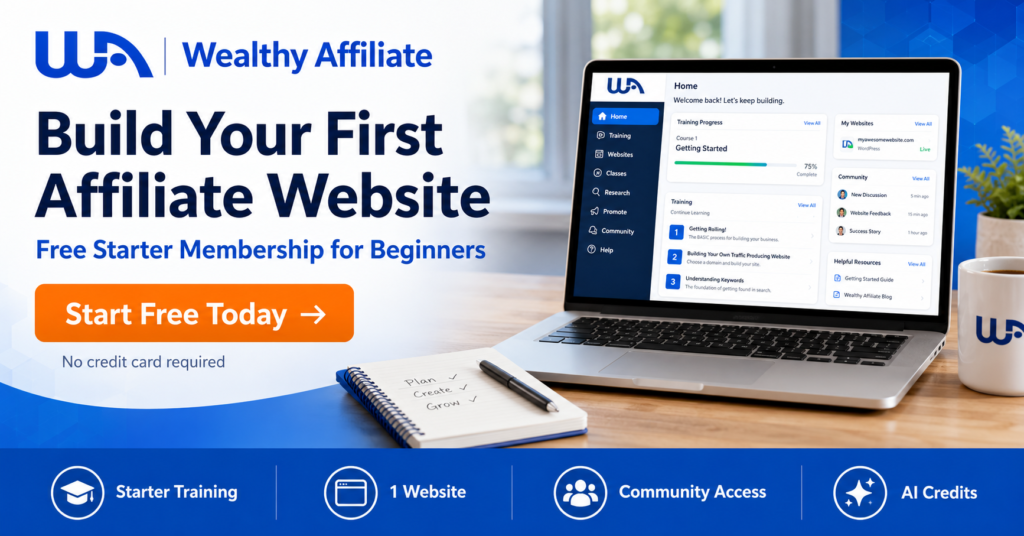
Wealthy Affiliate is designed to teach beginners how affiliate marketing works while also providing website tools, training, keyword research, hosting, and community support. One advantage is that beginners can currently try Wealthy Affiliate with a free Starter membership. According to Wealthy Affiliate, the free plan does not require a credit card and includes access to one website, starter training, community access, and AI credits.
That can make it easier to explore the platform before deciding whether to upgrade.
If you want a closer look before deciding, our full Wealthy Affiliate review explains what the platform includes, who it may help, and what beginners should realistically expect.
Common Mistakes to Avoid When Starting Your First Affiliate Website
Starting your first affiliate website is exciting, but it is easy to make mistakes early.
Here are a few to watch for.
Choosing a niche that is too broad
A broad website is harder to organize and harder to grow. Start with one clear topic and expand later if it makes sense.
Publishing only product reviews
Product reviews can be useful, but your website should also include educational content, beginner guides, comparisons, and problem-solving articles. A site with only reviews may feel too sales-focused.
Adding affiliate links too soon
It is okay to add affiliate links when they make sense, but beginners should focus on helpful content first. Trust comes before commissions.
Giving up before the site has time to grow
A new affiliate website usually needs time. A few posts are not enough to judge whether the site can work. Consistency matters.
Ignoring internal links
Internal links help connect related content. Without them, your posts can feel isolated. A connected site is easier for readers and search engines to understand.
After your first posts are published, learning how to improve website traffic can help you understand the next stage of growing an affiliate website.
Frequently Asked Questions About Starting an Affiliate Marketing Website
Do I need a website to start affiliate marketing?
You do not technically need a website, but it is usually the strongest long-term foundation. A website gives you a place to publish helpful content, organize your recommendations, and attract search traffic over time.
How much does it cost to start an affiliate marketing website?
Startup costs vary, but beginners typically need a domain name, hosting, and basic website tools. Some platforms offer free starter options, while others require separate hosting and paid tools.
Can I start affiliate marketing with no experience?
Yes, beginners can start affiliate marketing with no previous experience, but there is still a learning curve. You will need to learn content creation, website setup, search intent, affiliate programs, and how to build trust with readers.
How many posts should I publish before joining affiliate programs?
There is no exact number, but it often helps to have some useful content published before applying. A website with a clear niche, basic pages, and several helpful articles looks more complete than an empty site.
How long does it take for an affiliate website to get traffic?
Traffic can take time, especially from search engines. Some posts may get impressions within weeks, while others may take months to gain traction. The timeline depends on your niche, content quality, competition, and consistency.
How to Start Affiliate Marketing: Final Thoughts
Starting affiliate marketing becomes much less overwhelming when you focus on building your first website one step at a time. You do not need to master everything on day one. Start with a clear niche, create a simple website, publish helpful content, and learn how affiliate programs fit naturally into your topic.
Your first website is where you practice the skills that matter most: writing helpful articles, understanding your audience, building trust, and improving over time.
Affiliate marketing is not instant, but it can become a realistic long-term project when you approach it with patience and consistency. The best first step is simple: choose your niche, build your website, and start creating helpful content.
Everything You Need to Build Your Affiliate Website Is Right Here
If you’re working on your first affiliate website, we’ve put together more beginner-friendly guides to help you understand setup, content, traffic, and the steps that help a site grow over time.