

Affiliate marketing for beginners can feel confusing at first, but the basic idea is simple: you recommend a product, service, tool, or platform and may earn a commission when someone makes a purchase through your referral link.
Instead of creating your own product, handling inventory, managing shipping, or dealing with customer service, affiliate marketing lets you focus on helping people find useful solutions. That is what makes it appealing to beginners who want to build a flexible online project around content, recommendations, and trust.
The key is understanding that affiliate marketing is not instant income. It takes time to choose a niche, build a website, create helpful content, attract visitors, and learn what actually connects with readers. Beginners who approach it with patience and realistic expectations usually have a better chance of sticking with the process.
In this guide, we’ll walk through affiliate marketing for beginners step by step so you can understand how the model works, how affiliate links generate commissions, how traffic fits into the process, and what mistakes often cause new affiliates to quit too soon.
If you are new to affiliate marketing, this guide is designed to give you the full roadmap first. From here, you can move into the deeper EWA guides on choosing programs, building your first website, growing traffic, and turning your content into a real affiliate marketing strategy.
This post contains affiliate links. If you purchase through them, we may earn a small commission at no extra cost to you.

Table of Contents
What Is Affiliate Marketing and How Does It Work?
Affiliate marketing is a business model where you recommend products, services, tools, or platforms online and may earn a commission when someone makes a qualifying purchase through your referral link. Instead of creating your own product, managing inventory, handling shipping, or providing customer support, your role is to create helpful content that connects people with products or services that may solve their problems. That content can take many forms, including product reviews, comparison articles, tutorials, buyer guides, and educational posts built around questions people are already searching for.
The basic process is straightforward. A company creates an affiliate program, you join that program and receive a unique tracking link, and then you create helpful content that includes that link where it makes sense. If a reader clicks your link and completes a qualifying purchase, the company can track that referral back to your content and may pay you a commission based on the rules of the program.
For beginners, one of the biggest advantages is that you do not have to manufacture products, stock inventory, ship orders, or process returns. Your focus is on helping readers understand their options and make better decisions. That is also why trust matters so much. Affiliate marketing works best when your content answers real questions, solves problems, compares choices honestly, and gives readers a useful reason to keep coming back to your site.
If you want a deeper explanation of the business model, tracking links, commissions, and how the different pieces fit together, our What Is Affiliate Marketing? A Simple Beginner Guide covers the fundamentals in more detail.
As your website grows and more people find your content, those helpful recommendations can create opportunities to earn commissions over time. It is not instant, but affiliate marketing can become a realistic long-term strategy when you consistently publish useful content around a clear topic.
Why Affiliate Marketing for Beginners Is So Popular
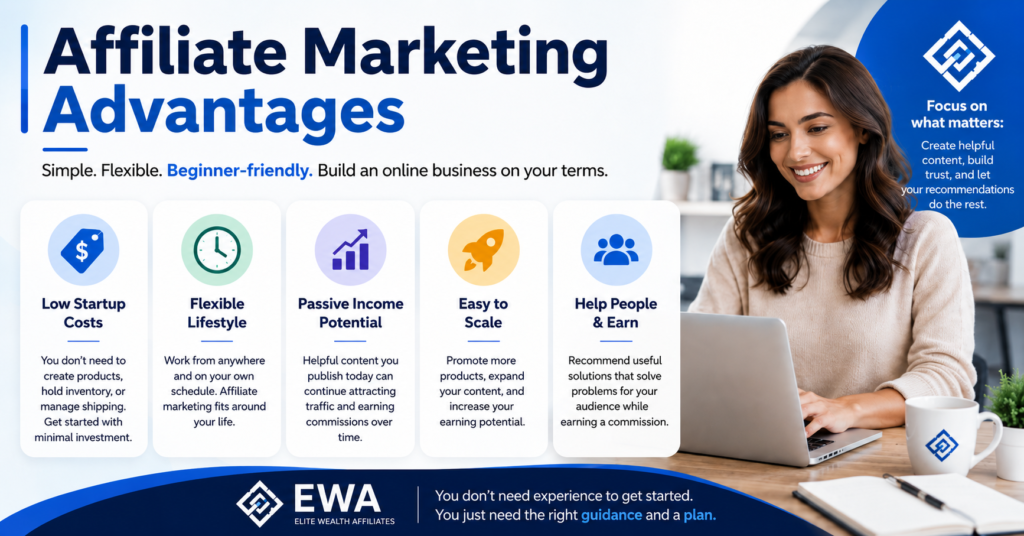
Affiliate marketing is popular with beginners because it removes many of the barriers that usually come with starting a business. Traditional businesses often require inventory, employees, physical space, shipping, customer service, and significant startup costs. Affiliate marketing is different because you can begin by creating helpful content around products, services, tools, or platforms that already exist.
One of the biggest advantages is that you do not have to create your own product. Companies already have the product, checkout process, delivery system, and customer support in place. Your role as an affiliate is to help connect people with solutions they are already researching online.
Affiliate marketing is also flexible. Many beginners start it as a side project while working a full-time job, managing family responsibilities, or exploring a new skill. You can build a website around a topic you care about, publish content at your own pace, and improve as you learn. Another advantage is the long-term value of online content. A helpful article, review, tutorial, or comparison post can continue attracting visitors long after it is published. That does not mean every post will rank or earn commissions, but strong content can keep working over time.
The earning potential is part of the appeal, but it is important to keep expectations realistic. Affiliate marketing takes time. You need to learn how to choose topics, understand search intent, create useful content, and recommend products honestly. That is why the beginner stage matters so much. When you understand the basics first, you have a better chance of building something useful instead of chasing shortcuts that rarely last.
How Affiliate Marketing Works Step by Step
Affiliate marketing becomes much easier to understand when you break it into a simple process. At its core, affiliate marketing connects three parts:
- The company selling a product or service
- The affiliate recommending that product or service
- The customer searching for a solution
When those three pieces come together through a tracked affiliate link, the affiliate may earn a commission from a qualifying purchase.
Here’s how the process usually works.
Step 1: Choose a niche or topic
Most affiliate marketers start by choosing a focused topic. This could be fitness, technology, home improvement, personal finance, outdoor gear, health products, software, or almost any area where people are actively searching for answers. A clear niche makes it easier to understand who you are helping, what kinds of questions they have, and what products or services may naturally fit the content you create.
Step 2: Create a website or content platform
For many beginners, a website is the strongest foundation for affiliate marketing because it gives you a permanent place to publish helpful articles, reviews, tutorials, comparisons, and guides. Social media and video can also support your strategy, but a website gives you a long-term home for your content and allows people to discover your work through search engines over time.
If you need help setting up that foundation, our guide on How to Set Up an Online Business walks through the basic pieces you need to get started.
Step 3: Join affiliate programs
Once you know your niche, you can look for affiliate programs related to that topic. These programs provide unique affiliate links that track clicks, referrals, and commissions. Some affiliate programs are run directly by companies, while others are managed through affiliate networks.
Step 4: Create helpful content
This is where the real work begins. Successful affiliate content usually helps readers solve a problem, compare options, or understand whether a product or service is right for them. Common examples include product reviews, buyer guides, comparison posts, tutorials, and beginner education articles. The goal is not just to add links. The goal is to create content that earns trust.
Step 5: Attract visitors
Visitors may find your content through Google, Bing, social media, email, referrals, or other websites. For beginners, search traffic is often the main long-term goal because helpful articles can continue being discovered after they are published. More traffic does not guarantee commissions, but targeted traffic gives your affiliate content a better chance to work.
Our guide on How to Improve Website Traffic covers practical ways to improve visibility and bring more of the right visitors to your site.
Step 6: Earn commissions from qualifying purchases
When someone clicks your affiliate link and completes a qualifying purchase, the company tracks the referral and pays you a commission according to that program’s rules. Commission rates, tracking periods, and approval terms vary by program, so it is important to understand how each one works before promoting it.
If you are ready to move beyond the basics, our guide on how to start affiliate marketing walks through the process of building your first affiliate website step by step.
Over time, as your content library grows and more people find your website, affiliate marketing can create opportunities to earn commissions from helpful content that continues working after it is published.
Common Mistakes Beginners Make with Affiliate Marketing
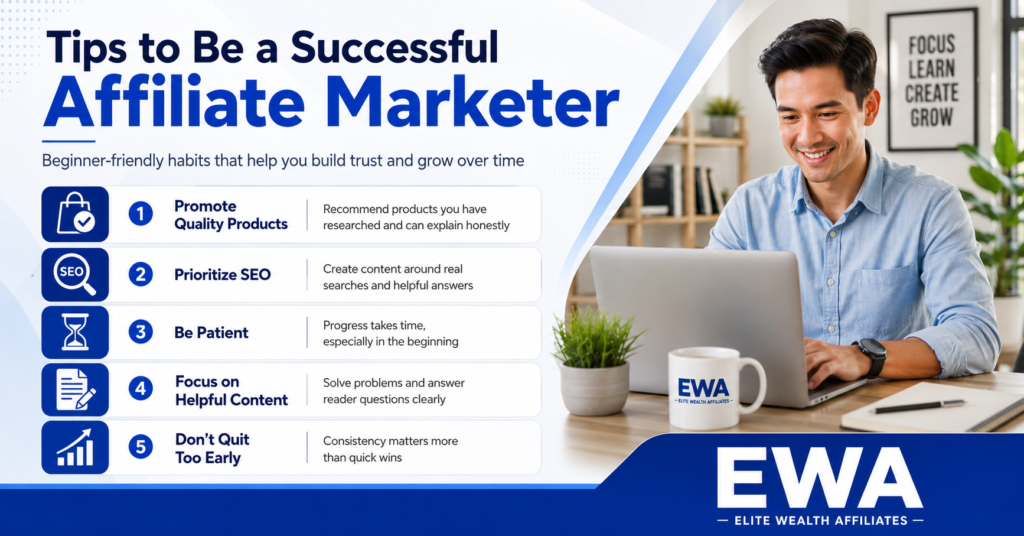
Affiliate marketing is simple to understand, but that does not mean beginners always approach it the right way. Many new affiliate marketers struggle because they expect fast results, choose too many topics, focus more on commissions than helping readers, or create content without understanding what people are actually searching for. Knowing these mistakes early can help you avoid wasting time and build a stronger foundation from the beginning.
Expecting Quick Results
One of the biggest mistakes beginners make is expecting affiliate marketing to produce fast income. In reality, most affiliate websites need time to grow because search engines have to discover and evaluate the content, readers need a reason to trust the recommendations, and the site owner has to learn which topics actually attract the right visitors. Affiliate marketing can work, but it is not instant, and treating it like a long-term project usually leads to better decisions than chasing quick wins.
Choosing Too Many Topics
Another common mistake is trying to cover too many unrelated topics on one website. A site that talks about fitness, software, pets, finance, outdoor gear, and home products all at once can feel scattered to both readers and search engines. Beginners usually have a better chance when they focus on one niche or a closely related group of topics, because a focused site is easier to organize, easier to write for, and easier for people to understand.
Promoting Products Before Helping Readers
Affiliate marketing works best when the content helps first. If an article only pushes a product without explaining the problem, comparing options, answering common questions, or helping the reader make a decision, it can feel thin and overly promotional. Helpful content builds trust by giving readers useful information before asking them to click a link, and that trust is what makes recommendations more valuable over time.
Ignoring Search Intent
Many beginners create content without thinking about what the person behind the search is actually trying to accomplish. Search intent is the reason behind a query, whether someone wants a definition, a step-by-step tutorial, a product review, a comparison, or a solution to a specific problem. When your content matches that intent closely, it has a better chance of satisfying the reader and earning search traffic than an article that only targets a keyword without answering the real question.
Giving Up Too Early
Affiliate marketing takes patience, and many beginners quit before their website has enough content, structure, or time to show what it can do. A handful of posts usually is not enough to judge whether a niche or site has real potential. The better approach is to keep learning, improve what is already published, add useful content around a clear topic, and give the site enough time to develop meaningful search visibility.
Pros and Cons of Affiliate Marketing for Beginners
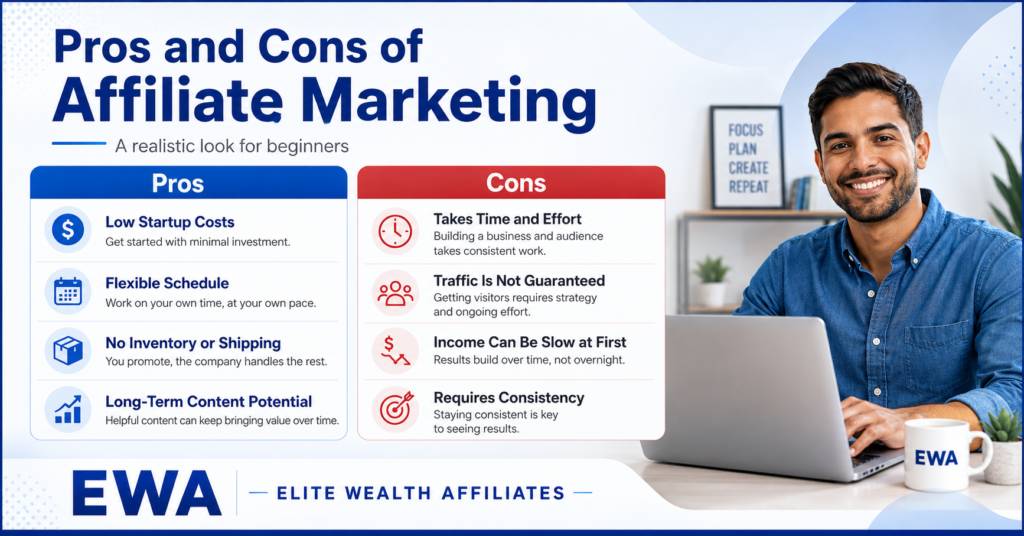
Affiliate marketing can be a beginner-friendly way to build an online business, but it is not perfect.
Like any business model, it has advantages and challenges. Understanding both sides early can help you set realistic expectations and avoid frustration.
Pros of Affiliate Marketing
Low Startup Costs
Affiliate marketing usually requires less upfront investment than many traditional businesses. You do not need a storefront, warehouse, inventory, employees, or shipping system, which makes the barrier to entry much lower for beginners. Most people can start with a website, hosting, a few basic tools, and the time needed to create useful content around a focused topic.
No Products or Inventory
You do not have to create your own products or manage physical inventory. The company selling the product handles production, checkout, delivery, returns, and customer support, while your role is to help readers understand whether that product or service may solve their problem. That lets beginners concentrate on content, recommendations, and building trust instead of managing the operational side of a traditional business.
Flexible Schedule
Affiliate marketing can be started part-time and built around your current schedule. Many beginners work on their websites in the evenings, on weekends, or whenever they have time, which makes it easier to learn the business without immediately changing everything else in their lives. That flexibility is one of the reasons affiliate marketing appeals to people looking for a project they can build gradually.
Long-Term Content Potential
Helpful content can continue attracting visitors long after it is published. A strong article, review, tutorial, comparison, or buyer guide may continue bringing in search traffic for months or even years if it answers the right questions and stays useful. Not every post will perform that way, but the ability to build a growing library of content that continues working over time is one of the biggest long-term advantages of affiliate marketing.
Cons of Affiliate Marketing
Results Take Time
Affiliate marketing rarely produces quick results. Beginners usually need time to publish enough useful content, earn search visibility, attract the right visitors, and build trust with readers before meaningful traffic or commissions begin to appear. A new website may take months to gain traction, which is why realistic expectations matter from the beginning.
There Is a Learning Curve
The basic concept of affiliate marketing is simple, but the skills needed to build a successful website take time to learn. Beginners have to understand niche selection, website setup, content writing, search intent, SEO basics, affiliate programs, and how to write recommendations that feel helpful rather than pushy. None of those skills are impossible to learn, but they do require practice and patience.
Some Niches Are Competitive
Affiliate marketing is popular, which means some topics are much harder to break into than others. Broad niches such as finance, fitness, technology, and software can be especially competitive because established websites are already covering many of the same searches. Beginners often have a better chance when they focus on a more specific audience, problem, or group of related topics instead of trying to compete across an entire broad market.
Consistency Is Required
Affiliate websites usually grow through steady effort rather than a few bursts of activity. Publishing a handful of posts and waiting for fast results often leads to disappointment because the site has not had enough time or content to develop real momentum. The better approach is to keep learning, improve what is already published, and continue building useful content around a clear niche.
Affiliate marketing has real advantages, but it also requires patience, consistency, and realistic expectations. For beginners, the goal should be to build a strong foundation first and let results grow from that foundation over time.
Where Beginners Can Actually Start Affiliate Marketing
Once you understand the basic idea of affiliate marketing, the next step is learning how to put the pieces together. That usually means choosing a niche, building a website, creating helpful content, understanding keywords and search intent, attracting visitors, and joining affiliate programs that fit your topic. None of those steps are especially complicated on their own, but they can feel overwhelming when you are trying to learn everything at once.
There is plenty of free information available online through blog posts, videos, tutorials, forums, and communities. Some beginners do well learning independently and piecing together the process as they go, while others prefer a more structured path that puts the training, tools, and steps in a clearer order. The best approach depends on how you like to learn and how much guidance you want when building your first affiliate website.
A training platform can help organize the process by walking beginners through website setup, niche selection, keyword research, content planning, SEO basics, and affiliate marketing strategy in a more structured way. One platform many beginners come across is Wealthy Affiliate, which combines affiliate marketing training with website tools, keyword research, hosting, and community support.
Wealthy Affiliate currently offers a free Starter membership, which gives beginners a way to explore the platform before deciding whether a paid membership makes sense. That can be useful if you want to see how the training is organized, look around the tools, and get a feel for the platform without making an immediate commitment.
That does not mean every beginner needs a training platform. Some people prefer to learn independently using free resources, while others value having a guided system that shows them what to do next. Either approach can work, but the important part is choosing a learning path that helps you keep moving instead of constantly jumping between unrelated advice.
If you are considering a structured training platform, our full Wealthy Affiliate review breaks down the training, tools, community, membership options, and what beginners should realistically expect before getting started.
No matter where you begin, the most important factor is still consistent effort. Training can help organize the process, but building useful content, learning from mistakes, improving your website, and staying with the process long enough to gain real experience are what create the foundation for long-term growth.

Our Does Wealthy Affiliate Actually Work? guide explains what the platform can realistically help with and where beginners still need to do the work themselves.
Frequently Asked Questions About Affiliate Marketing for Beginners
What Is Affiliate Marketing for Beginners?
Affiliate marketing is a business model where you recommend products, services, tools, or platforms online and may earn a commission when someone completes a qualifying action through your affiliate link.
For beginners, the basic goal is to create helpful content that answers questions, solves problems, or helps readers compare options before making a decision. The affiliate link connects that content to a company’s tracking system so qualifying referrals can be credited back to you.
How Much Can Beginners Make With Affiliate Marketing?
Affiliate marketing earnings vary widely, and there is no guaranteed income level.
Some beginners earn little or nothing at first, while others gradually build websites that generate commissions over time. Results depend on factors such as your niche, content quality, traffic, affiliate programs, competition, and consistency. It is better to treat affiliate marketing as a long-term project than as a quick source of income.
Do I Need a Website to Start Affiliate Marketing?
You do not technically need a website, but having one is usually the strongest long-term foundation.
Social media, video, email, and other platforms can also be used, but a website gives you a permanent place to publish articles, reviews, tutorials, comparisons, and guides that people can discover through search engines. If your goal is to build around long-term search traffic, a website is usually the better starting point.
Is Affiliate Marketing Difficult to Learn?
The basic concept is simple, but the skills take time to develop.
Beginners usually need to learn niche selection, content writing, keyword research, search intent, SEO basics, affiliate programs, and how to make recommendations that feel useful rather than forced. Affiliate marketing is accessible to beginners, but progress usually comes from learning one skill at a time and applying it consistently.
How Long Does It Take to Make Money With Affiliate Marketing?
Affiliate marketing rarely produces immediate results.
Many beginners spend months creating content, improving their websites, and learning how to attract targeted visitors before seeing meaningful commissions. Some niches take longer than others, especially when competition is strong. The better approach is to focus first on building useful content and search visibility, then let the income side develop as the site gains traction.
What Are the Best Affiliate Programs for Beginners?
The best affiliate programs for beginners depend on your niche, audience, and the type of content you plan to create.
A strong beginner-friendly program should have clear terms, reliable tracking, useful products or services, reasonable commission potential, and a good fit with the people you are trying to help. Choosing the right program matters more than simply chasing the highest commission rate.
Our guide: Best Affiliate Marketing Programs for Beginners explains what beginners should look for before joining one.
Ready to Start Affiliate Marketing?
Affiliate marketing can feel overwhelming at first, but the basic idea is simple: create helpful content, recommend useful products or services, and earn commissions when readers make qualifying purchases through your affiliate links. You do not need to create your own products, manage inventory, ship orders, or handle customer service. Your role is to help people find solutions, compare options, and make more informed decisions.
What matters most is understanding that affiliate marketing is a long-term process. Most beginner websites grow gradually as content is published, search visibility improves, and readers begin to trust the information being shared. The stronger your niche, content, structure, and consistency become, the better foundation you have for building something that can keep growing over time.
If you approach affiliate marketing as a real content business instead of a shortcut to fast income, the process becomes much easier to understand. Learn the fundamentals, build around a clear topic, create content that helps people, and keep improving based on what your audience and search data are showing you.
Ultimately, success with affiliate marketing for beginners comes down to learning the fundamentals, creating helpful content, and staying committed to building a resource that genuinely helps people.

No credit card required — explore the starter training before deciding whether to upgrade
Everything You Need to Learn Affiliate Marketing Is Right Here
If you want to keep learning, explore our Affiliate Marketing Guides for more beginner-focused help with websites, programs, traffic, content, and the steps that come next.