
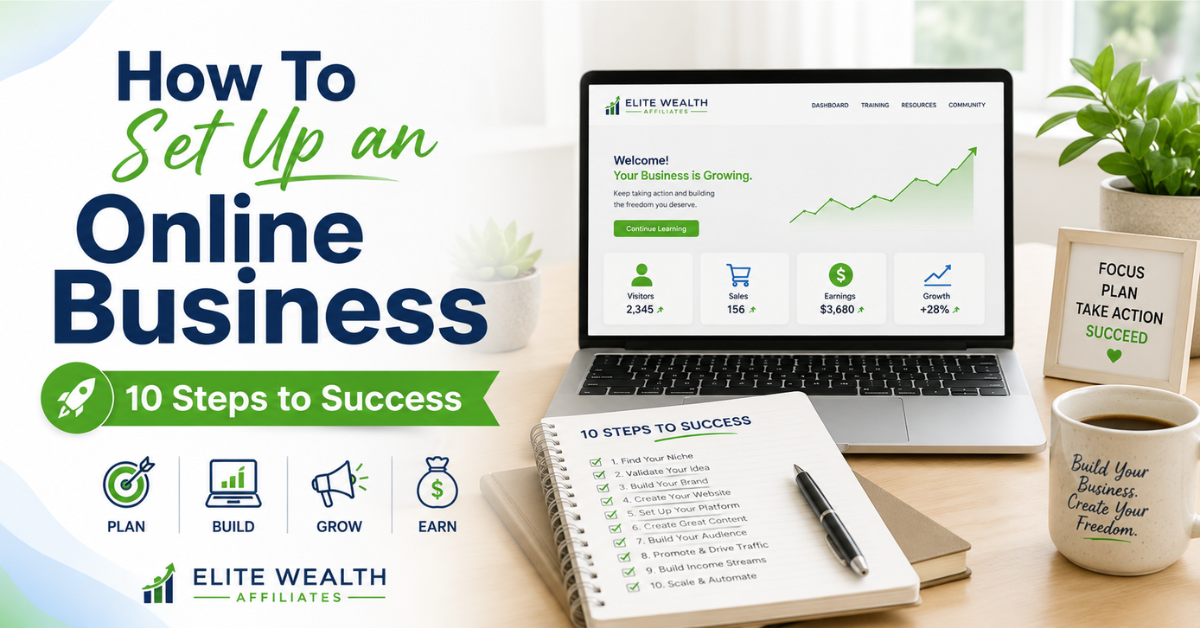
Wondering how to set up an online business but not sure where to begin? That is one of the most common problems beginners face. The idea sounds exciting, but once you start thinking about niches, websites, content, traffic, products, and tools, it can feel like there are too many directions to choose from.
The good news is that setting up an online business does not have to start with a complicated plan. It starts with a clear foundation. You need to decide who you want to help, what problem your business will solve, how you will reach people online, and what type of offer or recommendation will eventually create income.
For many beginners, the simplest path is to build a content-based website around a focused topic. That could lead to affiliate marketing, digital products, services, or another online business model later. The important part is learning how to create something useful, attract the right visitors, and build trust before trying to monetize everything too quickly.
This guide walks through 10 practical steps to help you move from idea to foundation. We’ll cover choosing a niche, setting up your website, creating content, learning traffic basics, and building toward a business that fits your goals instead of chasing random online opportunities.
This post contains affiliate links. If you purchase through them, we may earn a small commission at no extra cost to you.

Table of Contents
How To Start Your Own Online Business
Starting an online business can sound exciting, but it can also feel confusing fast. You may hear about websites, niches, SEO, social media, email lists, affiliate programs, digital products, and AI tools all at once. That is enough to make most beginners stop before they even begin.
The good news is that setting up an online business does not have to be complicated at the start. You do not need to have everything figured out on day one. You just need a clear idea, a simple plan, a place to build, and the patience to keep improving over time.
This guide breaks the process down into 10 simple steps. The goal is not to overwhelm you with every possible strategy. The goal is to help you understand what matters first, what can wait, and how to start building an online business in a realistic way.
Before You Start: Keep Expectations Realistic
An online business is not a magic button for fast money. It can give you more flexibility than a traditional business, but it still takes work. You have to learn, create, test, improve, and stay consistent.
Many beginners fail because they expect quick results. They build a website, publish a few pieces of content, and get frustrated when money does not appear right away. That is not usually how online business works.
A better way to think about it is this: you are building a foundation. At first, your job is to choose a clear direction, create something useful, and start attracting the right people. Income comes later when your website, content, traffic, and offers begin working together.
10 Steps to Set Up an Online Business
Step 1: Choose a Simple Business Idea
The first step is choosing what your online business will be about. This does not need to be perfect, but it does need to be clear.
Start with a topic you understand, enjoy, or are willing to learn more about. This could be fitness, home improvement, personal finance, parenting, pets, technology, outdoor gear, health products, online tools, or almost anything else people search for online.
The best ideas usually sit in the middle of three things: something people care about, something that has products or services connected to it, and something you can keep creating content about.
Do not make this too broad. “Health” is too big. “Home blood pressure monitors for beginners” is more focused. “Technology” is too big. “Simple tools for new affiliate marketers” is more focused. A clear idea makes the rest of the business easier.
Step 2: Decide Who You Want to Help
Once you have an idea, think about who your business is for. This is your target audience.
Your audience is the group of people you are trying to help. They may be beginners, busy parents, retirees, small business owners, homeowners, pet owners, new affiliate marketers, or people trying to solve a specific problem.
This matters because your content should speak to real people, not everyone on the internet. When you know who you are helping, it becomes easier to choose topics, write helpful articles, recommend products, and build trust.
Ask yourself a few simple questions. What problem does this person have? What are they confused about? What are they trying to buy, learn, fix, compare, or improve? Your business becomes stronger when it answers those questions clearly.
Step 3: Choose Your Online Business Model
An online business can make money in different ways. You do not need to use every model at once. In fact, beginners usually do better by starting with one simple path.
Affiliate marketing is one common model. You create helpful content and recommend products, services, or platforms. If someone clicks your affiliate link and makes a purchase or takes an action, you may earn a commission.
If you’ve never heard of affiliate marketing or still are not sure how it works, our What Is Affiliate Marketing? A Simple Beginner Guide breaks down the basic idea before you choose it as your online business model.
Other models include selling your own digital products, offering services, running an online store, creating paid memberships, or building a content website that earns from ads and partnerships.
For beginners, affiliate marketing is often one of the simplest places to start because you do not have to create your own product, handle shipping, or manage customer service. You can focus on building a website, creating useful content, and helping readers find the right solution.
Step 4: Pick a Name and Basic Brand Direction
Your brand does not need to be fancy at the beginning. You need a name, a simple message, and a consistent look.
Choose a name that is easy to read, easy to remember, and connected to your topic. Avoid names that are too clever or confusing. If people cannot quickly understand what your site is about, they may not stick around.
Your brand voice matters too. Decide how you want to sound. Friendly? Practical? Professional? Beginner-friendly? Honest and direct? Once you choose that tone, keep it consistent across your website and content.
You can improve the logo, colors, and design later. At the start, clarity matters more than perfection.
Step 5: Build a Simple Website
Your website is the home base for your online business. Social media can help, but your website is where your content, offers, reviews, guides, and recommendations live.
A beginner website does not need to be complicated. You need a clean layout, easy navigation, a homepage, an about page, a contact page, legal pages, and a simple structure for your articles.
WordPress is a common choice because it gives you flexibility as your site grows. Some platforms, including Wealthy Affiliate, provide website tools and training that help beginners set up a WordPress-based site without needing advanced technical skills.
Do not spend months trying to make your website perfect. Get a clean foundation online, then improve it as you learn.
If you want to see how a guided training platform walks beginners through website setup and content building, our Wealthy Affiliate Training Explained guide breaks down what the training includes and how it helps new affiliate marketers get started.

Step 6: Create Helpful Content
Content is how people find your business online. This could be blog posts, reviews, tutorials, comparisons, buying guides, videos, or helpful answers to common questions.
For a beginner website, written content is often the easiest place to start. You can create articles that answer real questions people are searching for. Over time, those articles can bring visitors to your website through search engines.
Helpful content should solve a problem. It should explain something clearly, compare options, answer a question, or help someone make a better decision. The goal is not just to publish words. The goal is to become useful.
Start with simple topics. Write for beginners. Use clear headings. Explain things like you are helping one real person understand the topic better.
Step 7: Learn Basic SEO and Traffic
SEO stands for search engine optimization. In simple terms, it means helping your content get found on Google and other search engines.
You do not need to master advanced SEO right away. Start with the basics. Choose topics people are searching for. Use clear titles. Answer the question directly. Organize your article with helpful headings. Link to related content on your site. Make sure your article is actually useful.
Traffic usually takes time. A brand-new website may not get many visitors at first. That is normal. Search engines need time to discover your content, understand your site, and test where your pages should rank.
The key is to keep publishing useful content and improving what you already have. Over time, traffic can grow as your site becomes stronger.
Step 8: Add a Way to Make Money
Once your website has helpful content, you can begin adding ways to make money.
For affiliate marketing, this means joining affiliate programs that fit your niche. For example, if your website helps people compare online business tools, you might recommend platforms, software, courses, or services that match your audience’s needs.
The best affiliate links feel natural. They should fit the article and help the reader take the next step. A product review, comparison article, tutorial, or buying guide can all be good places to include affiliate recommendations.
Do not add links just to add links. Focus on helping the reader first. Trust is what makes people click, compare, and eventually buy.
Step 9: Track What Is Working
Once your website is live and content is being published, start paying attention to what is working.
You can use tools like Google Analytics and Google Search Console to see how people are finding your site, which articles are getting impressions, which pages are receiving traffic, and what search terms are starting to show up.
At first, the numbers may be small. That is okay. You are looking for signals. Are articles getting indexed? Are impressions increasing? Are people clicking through to your site? Are certain topics getting more attention than others?
Tracking helps you make better decisions. Instead of guessing, you can create more content around topics that are already showing signs of interest.
Step 10: Keep Improving and Growing
An online business is not finished after the website goes live. That is only the beginning.
The real growth comes from improving over time. Update old articles. Add internal links. Create more helpful content. Test better titles. Improve your website layout. Learn from your traffic. Try new affiliate programs when they make sense.
This is also where consistency matters most. Many beginners quit too early because the first few months feel slow. But online business often grows gradually. Each helpful article adds another chance for someone to find your site.
If you keep learning, publishing, improving, and paying attention to what works, your online business has a much better chance of growing into something real.

How Wealthy Affiliate Can Help
Wealthy Affiliate can be useful for beginners who want a more guided way to learn affiliate marketing and build a website. Instead of trying to figure out hosting, WordPress, keyword research, content creation, SEO, and community support from separate places, Wealthy Affiliate brings many of those pieces together in one platform.
The free Starter membership gives beginners a way to explore the platform before paying. You can look at the basic training, see how the tools work, and decide whether the learning style fits your goals.
If you want a more guided way to build your first website, our Wealthy Affiliate Review explains how the platform combines training, website tools, hosting, keyword research, and community support for beginners.
Wealthy Affiliate is not required to start an online business, and it does not guarantee success. But for someone who wants help learning affiliate marketing step by step, it can make the beginning feel less confusing.
Common Mistakes Beginners Should Avoid
One common mistake is choosing a topic that is too broad. If your website tries to help everyone, it usually ends up helping no one clearly. A focused niche is easier to build.
Another mistake is trying to monetize too early. If your site has no helpful content and no traffic, affiliate links will not do much. Build trust first.
A third mistake is giving up too soon. Many online businesses take time to grow. Slow progress does not always mean failure. It may simply mean the site is still new.
Finally, avoid chasing every new strategy. Pick a clear direction, build the foundation, and give the process enough time to work.

Frequently Asked Questions About Setting Up an Online Business
Do I need a lot of money to start an online business?
No, many online businesses can be started with a small budget. You may need a domain, hosting, basic tools, and time to create content, but you do not usually need the same upfront cost as a traditional storefront.
What is the easiest online business for beginners?
Affiliate marketing is often one of the simplest models for beginners to understand. You do not have to create your own product or handle shipping, but you still need to build a website, create helpful content, and attract visitors.
How long does it take to make money online?
Most beginners should expect it to take time. Some people may see early signs of progress within a few months, but building steady traffic and income usually takes longer.
Do I need technical skills to start?
No, you do not need advanced technical skills to begin. You will need to learn basic website setup, content creation, and online marketing, but most of those skills can be learned step by step.
Can Wealthy Affiliate help me start an online business?
Yes, Wealthy Affiliate can help beginners learn affiliate marketing and build a website. It provides training, website tools, keyword research resources, and community support, but your results still depend on your effort and consistency.
Why We Recommend Wealthy Affiliate for Beginners
If you are trying to set up an online business and affiliate marketing is the direction you want to explore, Wealthy Affiliate is the platform we would recommend starting with.
The reason is simple: beginners usually do not need more random advice. They need a clear next step. When you are brand new, it is easy to get stuck trying to figure out hosting, WordPress, niches, keywords, content, SEO, and affiliate programs all at the same time. That confusion alone can stop people before they ever really begin.
That is one of the reasons we like Wealthy Affiliate. It puts the early pieces in one place and gives you a path to follow. You can start learning how affiliate marketing works, begin building a website, research content ideas, ask questions, and move forward without feeling like you have to figure out every tool and strategy by yourself.
That is also how we got started. We did not begin with everything figured out. We needed a simple way to learn the process, understand how affiliate websites worked, and start building step by step. Having training, tools, and support in one place made the beginning feel much less overwhelming.
Wealthy Affiliate will not do the work for you. You still have to choose a niche, create helpful content, stay consistent, and give your website time to grow. But if your biggest problem is not knowing where to start, Wealthy Affiliate can help make the first steps much clearer.
The free Starter membership makes it easy to test for yourself. You can look around, explore the basic training, and decide whether the platform feels like the right fit before upgrading.

Free Starter membership — no credit card required
Final Thoughts: How To Set Up an Online Business
Setting up an online business is easier when you stop trying to do everything at once. You do not need a perfect brand, a massive audience, or a complicated plan on day one.
Start with the basics. Choose a clear idea. Understand who you want to help. Build a simple website. Create helpful content. Learn how traffic works. Add monetization when it makes sense. Then keep improving over time.
That is how a basic idea can slowly turn into a real online business.
Everything You Need to Build Your Affiliate Website Is Right Here
If you’re working on your first affiliate website, we’ve put together more beginner-friendly guides to help you understand setup, content, traffic, and the steps that help a site grow over time.