
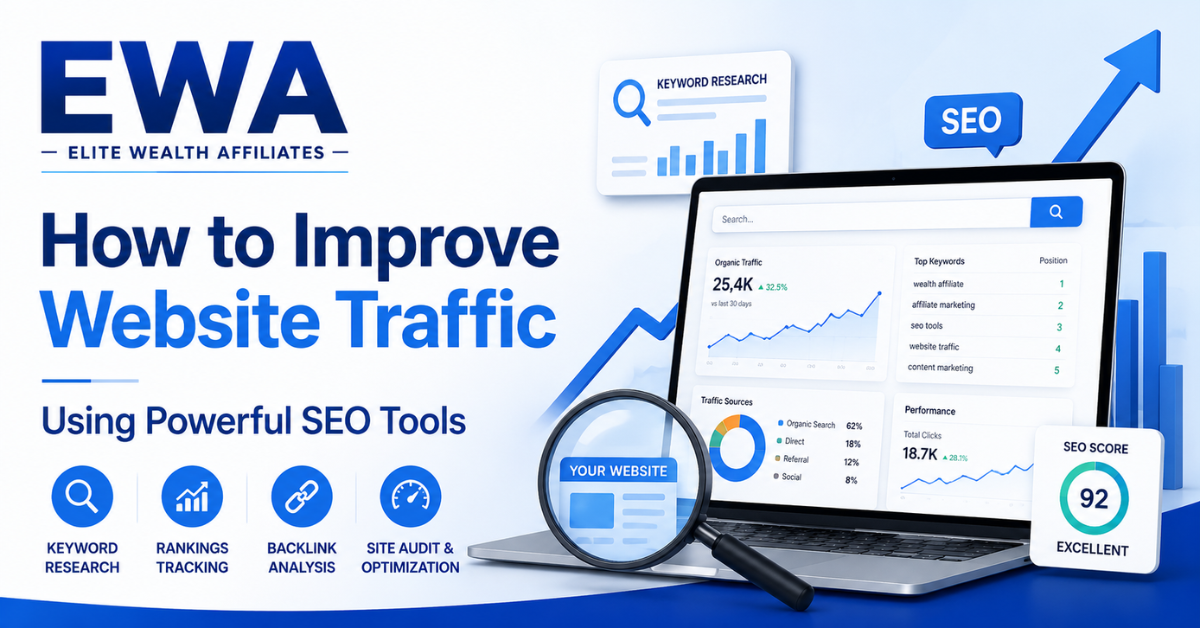
Learning how to improve website traffic is not about shortcuts or guessing. It is about understanding what your visitors are looking for, making your content easier to find, and giving people a reason to stay, read, and explore more of your site.
That is where SEO tools can help. Instead of wondering which topics to write about or why certain pages are not getting traffic, the right tools can show you what people are searching for, which content is performing, where your site needs improvement, and what opportunities you may be missing.
In this guide, we’ll walk through simple ways to use SEO tools to improve website traffic without making the process feel overwhelming. You’ll learn how to find better content ideas, improve your site structure, understand what is already working, and make small changes that can help more people discover your website over time.
The good news is that you do not need to fix everything at once. Small, thoughtful improvements can add up. When you understand what your audience needs and use the right tools to guide your next steps, growing your website traffic becomes much more manageable.
This post contains affiliate links. If you purchase through them, we may earn a small commission at no extra cost to you.
Table of Contents
Start Growing Your Traffic the Right Way
The first step in growing your website traffic is understanding that not all traffic is equal. A random visitor who leaves after a few seconds does not help much. A visitor who finds your article, gets a useful answer, clicks to another page, and trusts your recommendation is much more valuable. That is the kind of traffic you want to build.
A good place to begin is with the content you already have. Look at the posts that are getting impressions, clicks, or even a small amount of steady traffic. Those pages are showing signs of life, and that means they may be worth improving first. Sometimes a page does not need to be rewritten from scratch. It may simply need clearer headings, better internal links, updated information, a stronger answer near the top, or a more helpful next step for the reader.
This is where SEO tools become useful. Google Search Console can show you which searches are already bringing impressions. Google Analytics can show you which pages people visit and how they behave once they arrive. Tools like GetLasso can help you manage important links, improve how recommendations appear on the page, and track which links are getting attention. When you combine these tools, you start seeing your website more clearly.
Before traffic matters, your website needs the right foundation. Our How to Set Up an Online Business – 10 Steps to Success guide walks through the beginner steps for choosing a direction, building a site, creating content, and setting up for long-term growth.
Understand What Your Visitors Are Really Searching For
Every search has a reason behind it. When someone types a phrase into Google, they are usually trying to solve a problem, answer a question, compare options, or decide what to do next. That reason is called search intent, and understanding it is one of the most important parts of improving website traffic.
If someone searches for “how to improve website traffic,” they probably want simple steps they can actually use. They may not want a technical SEO lecture. They want to know what to fix, which tools help, and how to start seeing more visitors. If your article answers that clearly, visitors are more likely to stay and Google has a better chance of seeing your content as useful.
This is why keyword research is not just about finding words with search volume. It is about understanding what the person behind the search actually needs. Are they looking for a beginner guide? A tool recommendation? A checklist? A comparison? A fix for a specific problem? Once you know that, you can shape your content around the answer instead of writing a generic article that misses the point.
Improve the Content You Already Have
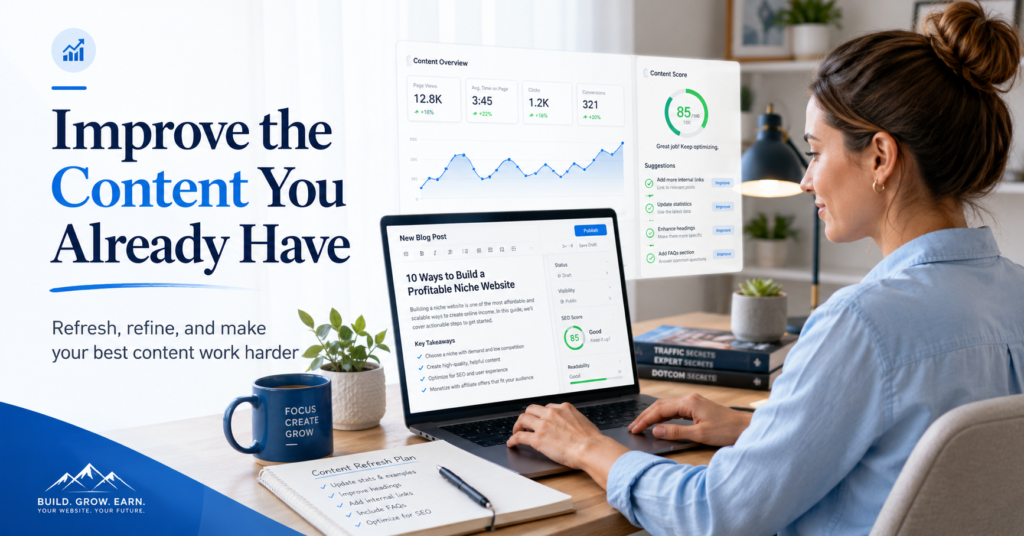
One of the easiest mistakes to make is thinking more traffic only comes from publishing new posts. New content matters, but older content can often be improved faster than brand-new content can rank. If a post already has impressions or sits near page two or three of search results, it may be close enough that a few smart updates can help.
Start by reading the article like a visitor. Does it answer the main question quickly? Are the headings clear? Is the content easy to follow? Are there outdated sections that need to be refreshed? Are there missing examples, weak explanations, or places where the reader might feel stuck? These are the kinds of improvements that can make an article more useful without changing the entire post.
You can also improve older posts by adding better internal links. If one article mentions a topic you explain more fully somewhere else, link to it. This helps the reader continue learning and helps search engines understand how your content connects. Over time, a stronger internal link structure can make your website feel more complete and easier to navigate.
Use Internal Links to Keep Visitors Moving
Internal links are one of the simplest traffic tools most site owners underuse. A good internal link gives the reader a natural next step. Instead of reaching the end of an article and leaving, they can click to a related guide, review, tutorial, or comparison that helps them continue solving their problem.
This matters because website traffic is not only about bringing people in. It is also about helping them stay. When readers move from one helpful page to another, they spend more time with your site and see more of what you offer. That builds trust, supports your content structure, and can help important pages get more attention.
The key is to link naturally. Do not force ten links into a short article just because you can. A few relevant links placed in the right spots are more useful than a crowded page full of distractions. Link where it helps the reader, not just where you want to push traffic.
If your goal is to build an affiliate website, our How to Start Affiliate Marketing: Beginner Tutorial for Your First Website explains how to set up your first site and start creating content that can attract the right visitors over time.
Make Your Content Easier to Read and Use
Good content is not just about the information. It is also about how the information is presented. If a page looks crowded, confusing, or hard to scan, many visitors will leave before they ever get to the best part.
Simple formatting can make a big difference. Clear headings help readers find the section they need. Shorter paragraphs make the page easier to read. Helpful images, screenshots, charts, and product boxes can break up the content and make the page feel more useful. A clean layout keeps readers focused instead of making them work too hard.
This is also where tools like GetLasso can help, especially for affiliate websites. Instead of relying only on plain text links, you can use cleaner displays for important recommendations. Product boxes, featured links, and organized callouts can make your content easier to use when they are placed naturally and not overdone.
Where GetLasso Fits Into Website Traffic Growth
GetLasso is not a magic SEO button, and it will not create traffic by itself. Its value is in helping you make your existing traffic more useful. If people already visit your pages, Lasso can help you present important links more clearly, manage affiliate links more efficiently, and see which recommendations are getting clicks.
That matters because traffic alone is not the whole goal. You also want visitors to take the next step. That might mean clicking a related article, checking out a recommended tool, comparing a product, or exploring a helpful resource. When your links are organized and easy to notice, visitors are more likely to interact with your content.
As your website grows, link management becomes more important. A small site may only have a handful of links to manage. A larger site can have affiliate links, internal links, product boxes, and recommendations spread across dozens or hundreds of posts. A tool that helps organize and track those links can save time and make your site easier to maintain.
Use Analytics to Make Smarter Decisions
Analytics can feel intimidating at first, but you do not need to track every number. Start with the basics. Which pages are getting traffic? Which posts are getting impressions but not clicks? Which articles keep people reading? Which links are visitors clicking? Which posts seem to be ignored?
Those answers help you decide what to do next. If a post gets impressions but few clicks, the title or meta description may need work. If a page gets traffic but no one clicks anything, the content may need a stronger next step. If one topic keeps performing better than others, that may be a sign to create more content around that subject.
The biggest benefit of analytics is focus. Instead of trying to improve everything at once, you can work on the pages with the most potential. That makes traffic growth feel more manageable because your time goes where it can have the biggest impact.
Build a Simple Traffic Routine
Website traffic grows best when improvement becomes a habit. You do not need a complicated system. You need a repeatable process that keeps your site moving forward.
A simple routine might look like this: publish helpful new content, update one older post each week, add internal links when they make sense, check Google Search Console for new keyword opportunities, and review which pages or links are getting attention. That may not sound exciting, but it is the kind of steady work that builds a stronger website over time.
Consistency matters more than doing everything perfectly. A few smart improvements each week can become a serious advantage after several months. The sites that grow are usually not the ones chasing every new trick. They are the ones that keep creating useful content, improving what already exists, and paying attention to what their visitors actually need.
Once your traffic starts growing, it helps to understand how affiliate marketing fits into the bigger picture. Our Affiliate Marketing for Beginners: Step-by-Step Guide to Getting Started explains how content, traffic, affiliate links, and commissions work together.
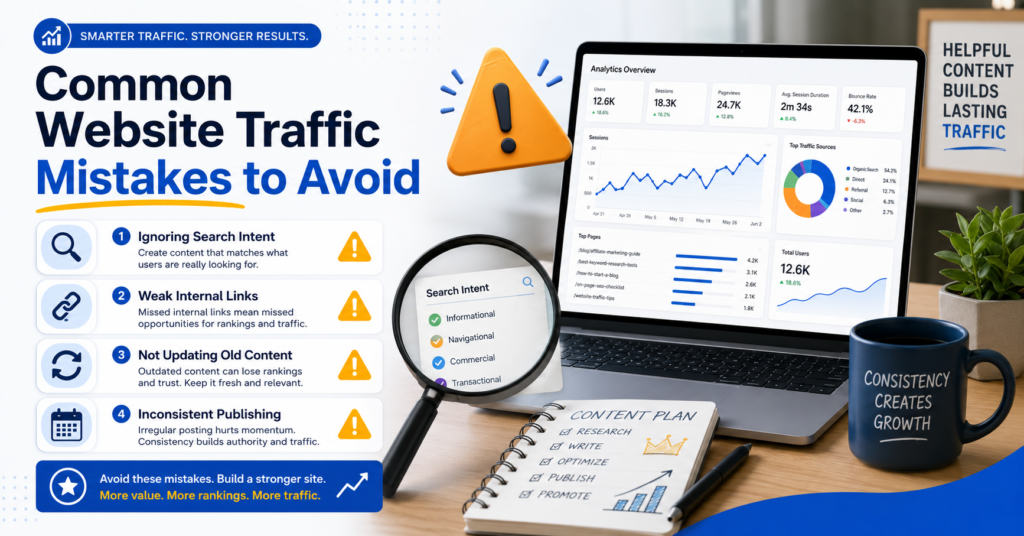
Common Website Traffic Mistakes to Avoid
One common mistake is writing without understanding search intent. If the article does not match what the reader wants, it will be harder to rank and harder to keep visitors engaged. Before writing or updating a post, always ask what the person searching that topic is really trying to accomplish.
Another mistake is ignoring old content. Many site owners keep publishing new posts while older articles sit untouched. If those older posts already have impressions or traffic, improving them can be one of the fastest ways to make progress.
A third mistake is adding too many links or visual elements. Internal links, product boxes, and callouts can help, but only when they support the reader. Too many distractions can make a page feel cluttered and reduce trust.
The final mistake is expecting fast results. SEO takes time. Traffic growth usually happens slowly, especially for newer websites. The goal is to make steady improvements and let those improvements build on each other.
Final Thoughts: How to Improve Website Traffic
Improving website traffic does not have to be overwhelming. Start by understanding your audience, matching your content to search intent, improving the pages you already have, and making your website easier to navigate. Then use SEO tools to guide your decisions instead of guessing.
Google Search Console, Google Analytics, keyword research tools, and GetLasso can all play a role. Some tools help you understand search visibility. Others help you track behavior, improve links, or present recommendations more clearly. The point is not to use every tool available. The point is to use the right tools to make smarter improvements.
The best place to start is with one page. Improve the answer. Add a helpful internal link. Make the content easier to read. Check the data. Then move to the next page and repeat the process.
That is how website traffic grows the right way: one useful improvement at a time.
Everything You Need to Build Your Affiliate Website Is Right Here
If you’re working on your first affiliate website, we’ve put together more beginner-friendly guides to help you understand website setup, content creation, traffic growth, SEO basics, and the steps that help a site grow over time.