

Affiliate marketing for beginners can seem confusing at first, but the basic idea is actually simple. Instead of creating your own product, affiliate marketing allows you to recommend products or services and earn a commission when someone makes a purchase through your referral link. It’s a business model that has helped thousands of people build side income — and in some cases, full-time online businesses.
One reason affiliate marketing for beginners has become so popular is the low barrier to entry. You don’t need to manufacture products, handle shipping, manage inventory, or provide customer support. With the right training, tools, and a simple website, almost anyone can learn how the process works and begin building an online income stream.
In this guide, we’ll walk through affiliate marketing for beginners step-by-step so you can clearly understand how the model works and what it takes to get started. You’ll learn how affiliate marketers generate traffic, how commissions are earned, which platforms beginners often use to learn the process, and the common mistakes that cause many people to quit before they ever see results.
Whether you’re looking to build a side income from home or start a long-term online business, understanding the fundamentals is the first step. Let’s take a closer look at how affiliate marketing works and why it continues to attract beginners who want to learn how to make money online.
This post contains affiliate links. If you purchase through them, we may earn a small commission at no extra cost to you.

Table of Contents
What Is Affiliate Marketing and How Does It Work?
Affiliate marketing is a simple business model where you earn a commission by recommending products or services online. Instead of creating your own product, you partner with companies that already sell products and promote them through your website, blog, or other online content.
Here’s the basic idea behind affiliate marketing for beginners. A company provides a special tracking link called an affiliate link. When someone clicks that link and makes a purchase, the company can see that the referral came from you and pays you a commission for the sale.
The process itself is surprisingly straightforward once you understand the steps.
- You create helpful content online, usually through a website, blog, or review site.
- You recommend products or services that solve a problem for readers.
- You include an affiliate link within your content.
- If a visitor clicks the link and makes a purchase, you earn a commission.
Many beginners are drawn to affiliate marketing because you don’t need to deal with inventory, shipping, or customer support. Your role is simply to help people find products or services that solve their problems.
If you’re completely new to the concept, our guide explaining what affiliate marketing is and how it works explores the fundamentals in more detail.
Over time, as your content grows and more people visit your website, those affiliate recommendations can begin generating commissions consistently. This is why affiliate marketing is often considered one of the most beginner-friendly online business models.
Why Affiliate Marketing for Beginners Is So Popular
Affiliate marketing for beginners continues to grow in popularity because it removes many of the barriers that usually come with starting a business. Traditional businesses often require inventory, employees, physical locations, and significant startup costs. Affiliate marketing, on the other hand, can often be started with very little investment.
One of the biggest advantages is that you don’t need to create your own products. Companies already have products, services, and support systems in place. As an affiliate marketer, your job is simply to connect people with solutions they are already searching for online.
Another reason affiliate marketing for beginners is appealing is the flexibility it offers. Many people start affiliate marketing as a side project while working a full-time job. Others build websites around hobbies or interests they already enjoy, gradually turning those topics into profitable content sites.
The earning potential is also attractive. Each time someone clicks your affiliate link and makes a purchase, you earn a commission. While a single sale may not seem like much at first, websites that consistently attract visitors can generate commissions repeatedly over time.
There is also a long-term advantage to building content online. Articles, reviews, and guides you publish today can continue attracting visitors months or even years later. This means your work can continue generating traffic and commissions long after the original content is created.
Of course, success rarely happens overnight. Affiliate marketing for beginners still requires learning how to create helpful content, understand what people are searching for, and recommend trustworthy products. But compared to many other business models, the entry point is much more accessible for people just starting out online.

How Affiliate Marketing for Beginners Actually Works Step-by-Step
Understanding the process makes affiliate marketing for beginners much less intimidating. While the idea of making money online can sound complicated, the actual workflow follows a very simple structure once everything is set up.
At its core, affiliate marketing connects three key parts of an online transaction:
- the company selling a product
- the affiliate recommending the product
- the customer searching for a solution
When these three elements come together, commissions are generated.
Here’s how the process typically works step-by-step.
Step 1: Choose a niche or topic
Most successful affiliate marketers start by focusing on a specific topic such as fitness, technology, home improvement, or personal finance. Choosing a niche helps you create focused content that attracts the right audience.
Step 2: Create a website or content platform
A website is the most common foundation for affiliate marketing for beginners. This is where you publish helpful articles, reviews, tutorials, and comparisons that answer questions people search for online.
Step 3: Join affiliate programs
Once your website is live, you can apply to affiliate programs offered by companies that sell products related to your topic. These programs provide unique affiliate links that track referrals and commissions.
Step 4: Create helpful content
The most successful affiliate websites focus on solving problems for readers. This often includes product reviews, buyer guides, comparisons, and educational articles that help visitors make informed decisions.
Step 5: Generate traffic
Visitors typically find affiliate content through search engines like Google, social media, or referrals from other websites. As more people discover your content, the potential for affiliate commissions grows.
Step 6: Earn commissions
When a visitor clicks an affiliate link and completes a purchase, the company tracks the referral and pays a commission to the affiliate.
If you’re ready to move beyond the basics, our guide on how to start affiliate marketing walks through the process of building your first website step-by-step.
Over time, as your website gains more content and traffic, affiliate marketing for beginners can begin producing consistent commissions from articles that continue attracting visitors long after they are published.
What You Need to Start Affiliate Marketing for Beginners
One reason affiliate marketing for beginners attracts so many people is that the startup requirements are relatively simple compared to traditional businesses. You don’t need a warehouse, employees, or expensive inventory. Instead, the foundation of affiliate marketing is built around a few key tools and skills.
A website or online platform
Most beginners start with a simple website where they can publish helpful articles, product reviews, and guides. A website acts as the central hub for your content and allows visitors to discover your recommendations through search engines.
A niche or topic
Choosing a focused topic helps attract the right audience. Some affiliate marketers build websites around hobbies such as fitness, technology, or outdoor activities. Others focus on solving specific problems that people frequently search for online.
Affiliate programs
Affiliate programs provide the special tracking links that allow companies to credit you for referrals. Many companies run their own affiliate programs, and there are also affiliate networks that connect marketers with thousands of products and services.
Helpful content
The most successful affiliate websites focus on creating content that answers questions and helps readers make informed decisions. This may include product reviews, comparison guides, tutorials, or articles that explain how certain products work.
Website traffic
For affiliate marketing for beginners to generate commissions, people need to find your content. Traffic often comes from search engines like Google, social media platforms, or referrals from other websites.
While these requirements may sound simple, building a successful affiliate website still takes time and consistency. Learning how to create useful content and attract visitors is what eventually turns a basic website into a profitable affiliate marketing business.

Common Mistakes in Affiliate Marketing for Beginners
While the concept behind affiliate marketing for beginners is straightforward, many people struggle because they approach it with unrealistic expectations. Understanding the most common mistakes early can help new affiliate marketers avoid frustration and build a stronger foundation for long-term success.
Expecting quick results
One of the biggest misconceptions about affiliate marketing is that it produces fast income. In reality, most successful affiliate websites take time to grow. Search engines need time to discover content, and building trust with readers doesn’t happen overnight.
Choosing too many topics
Another common mistake is trying to cover too many unrelated topics on one website. When beginners focus on a single niche or area of interest, it becomes easier to create consistent content and attract a targeted audience.
Promoting products without helping readers
Affiliate marketing works best when the content actually solves problems for readers. Articles that simply push products without offering helpful information often struggle to gain trust or attract search traffic.
Ignoring search intent
Many beginners publish content without understanding what people are actually searching for online. Learning how to answer common questions and provide useful information is one of the most important skills in affiliate marketing.
Giving up too early
Because results take time, some beginners stop publishing content before their website has a chance to grow. Affiliate marketing for beginners requires patience and consistency, but those who continue learning and improving their content often see results over time.
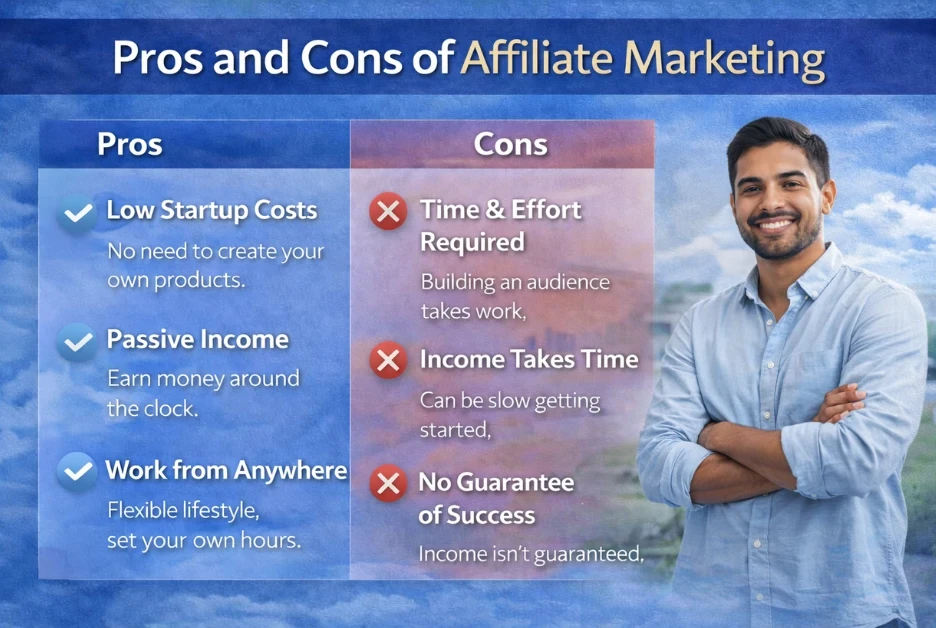
Pros and Cons of Affiliate Marketing for Beginners
Like any online business model, affiliate marketing for beginners has both advantages and challenges. Understanding these early can help set realistic expectations and avoid common frustrations.
Pros
Low startup costs
One of the biggest advantages is that affiliate marketing typically requires very little upfront investment. In many cases, beginners only need a website, hosting, and time to create helpful content.
No products or inventory
Affiliate marketers don’t need to create products, manage shipping, or handle inventory. The company selling the product manages those responsibilities while you focus on recommending useful solutions.
Flexible schedule
Affiliate marketing can be started part-time and worked around other commitments. Many beginners build their websites in the evenings or weekends while working a full-time job.
Scalable income potential
Content published online can continue attracting visitors for months or even years. As your website grows and gains more traffic, the potential for affiliate commissions increases.
Cons
Results take time
Affiliate marketing rarely produces immediate income. Most beginners need time to build content, attract traffic, and earn trust with readers before commissions start appearing.
Learning curve
While the concept is simple, beginners still need to learn website creation, content writing, and basic SEO to attract visitors from search engines.
Competition
Because affiliate marketing is popular, some niches can be competitive. Success usually comes from creating genuinely helpful content rather than simply promoting products.
Consistency is required
Affiliate websites grow over time. Beginners who publish content consistently tend to see better results than those who expect quick wins and give up too early.
Where Beginners Can Learn Affiliate Marketing
Once you understand the basics of affiliate marketing for beginners, the next step is learning how to build a website, create helpful content, and attract visitors through search engines.
Many beginners try to piece together information from scattered blog posts or videos online. While there is plenty of free information available, the learning process can often feel confusing without a clear step-by-step path.
This is why some beginners choose to start with structured affiliate marketing training platforms that guide them through the process of building an online business.
One example is Wealthy Affiliate, a platform designed specifically to teach beginners how affiliate marketing works. The platform includes training courses, website hosting, keyword research tools, and a community where members can ask questions while building their websites.
For readers who want a closer look at how the platform works in practice, we break everything down in our full Wealthy Affiliate review, including the training, tools, and what beginners can realistically expect when getting started.

While training platforms can help shorten the learning curve, the most important factor in affiliate marketing for beginners is still consistent effort. Building useful content, learning from mistakes, and continuing to improve your website over time are what ultimately lead to long-term success.
Frequently Asked Questions About Affiliate Marketing for Beginners
What is affiliate marketing for beginners?
Affiliate marketing for beginners is a business model where you earn commissions by recommending products or services online. Instead of creating your own products, you promote existing ones using special affiliate links. When someone clicks your link and makes a purchase, you receive a commission from the company.
How much can beginners make with affiliate marketing?
Earnings vary widely depending on the niche, traffic, and affiliate programs used. Some beginners earn small commissions at first, while others gradually grow their websites into full-time income streams. Most successful affiliate marketers focus on building helpful content and attracting consistent website traffic over time.
Do I need a website to start affiliate marketing?
While it’s possible to promote affiliate links through social media or other platforms, a website is the most common foundation for affiliate marketing for beginners. A website allows you to publish helpful content, rank in search engines like Google, and build long-term traffic that can generate ongoing commissions.
Is affiliate marketing difficult to learn?
The concept itself is simple, but beginners usually need time to learn important skills such as content creation, keyword research, and search engine optimization. With the right guidance and consistent effort, affiliate marketing is considered one of the most accessible online business models for beginners.
How long does it take to make money with affiliate marketing?
Affiliate marketing rarely produces immediate results. Many beginners spend several months building content and attracting traffic before earning consistent commissions. Websites that continue publishing helpful articles and growing their audience tend to see better long-term results.
What are the best affiliate programs for beginners?
The best affiliate programs depend on the niche you choose. Many beginners start with companies that offer simple sign-up processes and beginner-friendly resources. Some affiliate marketers also join training platforms that teach the process step-by-step while providing tools and support for building affiliate websites.
Final Thoughts on Affiliate Marketing for Beginners
Affiliate marketing for beginners can feel overwhelming at first, but the core idea is actually quite simple. By creating helpful content and recommending products or services that solve real problems, beginners can build websites that generate commissions over time.
One of the biggest advantages of affiliate marketing is that you don’t need to create your own products, manage inventory, or handle customer service. Instead, your focus is on building useful resources that help people make informed decisions online.
At the same time, it’s important to remember that affiliate marketing is not a get-rich-quick opportunity. Most successful websites grow gradually as content is published, search traffic increases, and readers begin to trust the recommendations provided.
For those willing to stay consistent, however, affiliate marketing offers something many online opportunities do not — the ability to build a long-term asset that can continue generating traffic and commissions for years.
If you’re interested in learning more about the tools and training many beginners use to get started, you can explore our detailed Wealthy Affiliate review, where we take a closer look at how the platform helps new affiliate marketers build their first websites.
Or click below to visit the official Wealthy Affiliate website and see how the platform works for yourself.

Ultimately, success with affiliate marketing for beginners comes down to learning the fundamentals, creating helpful content, and staying committed to building a resource that genuinely helps people.
Thanks for visiting, we look forward to your visit at EliteWealthAffiliates.com – Your Go-To Authority for Money & Wealth